Pages

Showing posts with label simulator. Show all posts

Saturday, 14 March 2015

Type rating so far

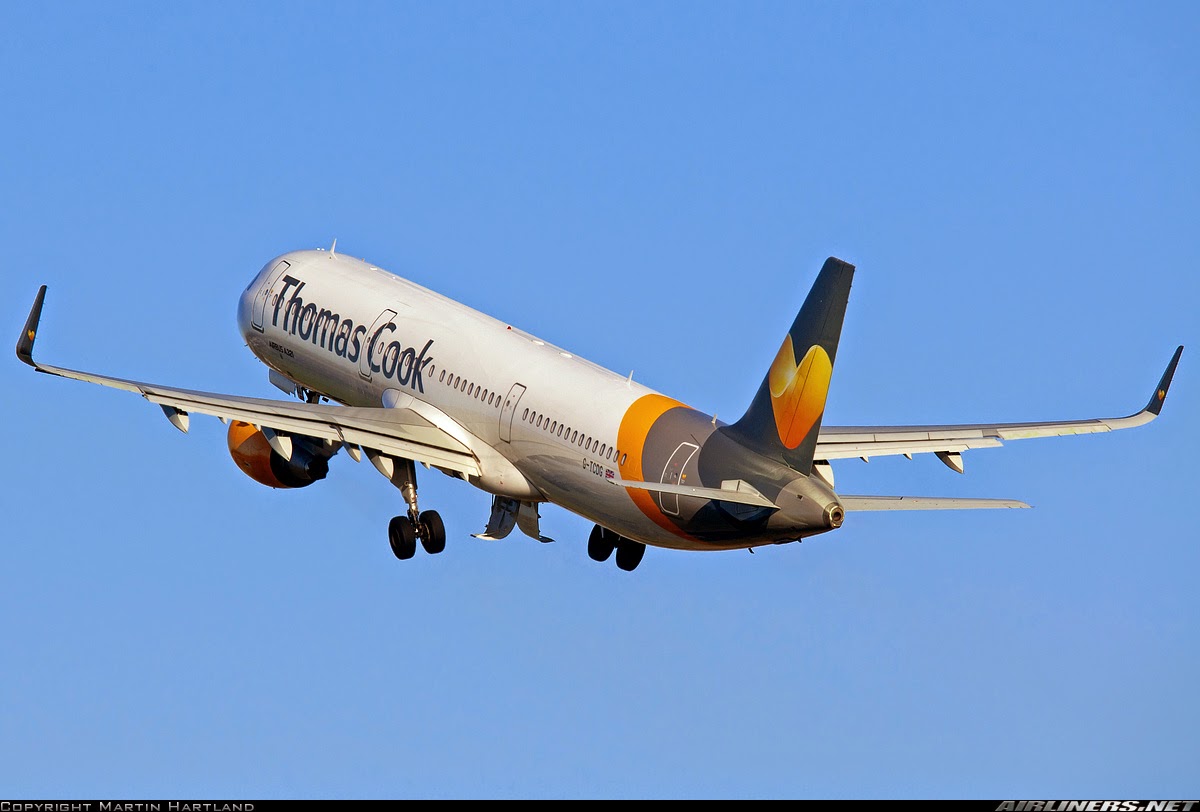
Photo from airliners.net
So it has been an extremely busy few weeks! I have now completed the A320 technical groundschool and have flown 2 of the 12 simulator sessions.

The groundschool is learning all about the systems of the A320; fuel, hydraulics, powerplants etc, with a final exam at the end. There is an awful lot to cram into the two week course, meaning for the duration my head was stuck in books 24/7!

The sims are now underway which is very exciting. 6 of them are motion off, 6 motion on and all are at the Nursling training centre - where my journey through pilot training began! We pair up with another person on the course and have 4 hour sessions, each split in half to make sure we get time as pilot flying and pilot not flying. I am loving the A320 so far and cannot wait to get into an A321 for real in just a matter of weeks!

The first sim involved a flight from Gatwick to Liverpool, the second Gatwick to East Midlands, both with a full start up and shutdown. The first few are more of a familiarisation to the aircraft - it is later on that we begin dealing with failures and abnormal scenarios. We spent a lot of groundschool time learning the SOPs, and it is beginning to all come together nicely.

Sorry for the short update, but there is lots to be doing! Until next time...
During groundschool we prepare for the sims using virtual flight decks


Wednesday, 6 August 2014

Beginning of the Bournemouth training


So I have been in Bournemouth for a week and a half now, meaning I am well into the simulator sorties. The initial two days were ground school - going over any differences from both procedures and how things work in the UK. The radio calls vary quite a lot compared to New Zealand and time is even more precious than in NZ due to the busier airspace - we need to be as concise and accurate as possible.

The first four simulator sessions are pretty much to help get back into the swing of instrument flying, consisting primarily of various VOR, NDB and ILS procedures. We have used Cardiff, Bristol and Bournemouth airports so far, with Cardiff and Bristol both being potential IR test routes.

The next sim which I have tomorrow is an autopilot flight. We are going to try using the autopilot for things we haven't tried so far - approaches, for example. Hopefully will be a fun flight!

After this, there are four LOFT sims. LOFT is Line Orientated Flight Training - basically single pilot commercial operation flights. One includes taking off from Heathrow, which in a Twinstar could be a laugh! The flights will include various scenarios which will require us to make firm, 'Captain-like" decisions, such as diverting. They are going to be hard work, but also sound like a lot of fun!

Once these are done we are onto the IR routes, which means that we prepare to get back into the aircraft (which I cannot wait for!). It seems the IR exam will be here in no time...

CTC's Bournemouth training centre is great - it is a very professional environment and has many extremely experienced instructors sitting inside of it to help us! The traffic we get is great and I have yet to tire of seeing the companies private jets; seeing these and the other jets go past is still a novelty; I am used to Dash 8s and ATRs!

Also, I made a little video putting together my New Zealand flying - hope you enjoy!


Monday, 9 June 2014

Uh oh why has the engine stopped and back to IFR

A worrying sight!
I have now completed my five initial DA42 VFR flights, which are really there to just familiarise us with flying a new aircraft type - especially one with an extra engine, retractable gear and is a whole lot faster.

The last three lessons were asymmetric (so practicing flying with an engine out), with a lot of emphasis placed on engine failures during critical stages of flight ie. takeoff/go around when we are in the most vulnerable stage (low speed, high power setting).

In the first of the three flights, we were just learning how to control and identify engine failures in various situations and were given some form of emergency where it was necessary to read through the Quick Reference Handbook and follow the procedures in there, which always led to the engine having to be shut down. When the engine stops it is "feathered", meaning that less drag is being created. This is because the engine is no longer windmilling through the air; when feathered the aircraft's performance increases and it is a lot easier to control. After flying around for a bit with one of the engines feathered, we had a go at the engine restart procedure - always a bonus when the engine comes back to life!

The second asymmetric flight focussed on performance during an engine failure. This included lowering the gear and putting flaps to landing, with one engine failed. We maintained Vyse, which is the best rate of climb with an engine out, in order to see the effect raising flap and gear had on the climb performance. Engine failures after take off were also involved, as was an engine failure whilst climbing at Vy.

Asymmetric circuits were last, which brought it all together. The instructor would fail an engine (simulated) after rotation and so I had to control the aircraft and identify the failed engine, before completing more checks and maintaing positive performance for a circuit to land. The lesson was pretty intense, although was only an hour long.

I am back in the simulators for six IFR flights now. My first was yesterday and was NDB tracking and holding; the others involve more NDB, ILS, emergencies and DME arcs. Once these are done, I'm back into the Twinstar to fly IFR routes in it - before returning again to VFR to prepare for my CPL. Busy times ahead!

These photos are taken by Christian - so thanks to him! 
Me taking off from NZRO
Climb out from NZRO
Turns out you roll pretty quickly if you do nothing when the engine fails...


Tuesday, 29 April 2014

Goodbye VFR, hello instruments!

Hi everyone. Very sorry for the lack of a new post! A fair amount has happened since my last update, although at the same time there has been a lot of waiting around.

Back at the beginning of March, I passed my PT1, which is the PPL test equivalent (you don't get a PPL on the course, we go straight to CPL). The test is 2 hours long and is done with one of the VFR flight instructors. The test basically consists of:

  • Ground work - preflight checks/mass and balance/aircraft performance/general questioning
  • Departure - taxiing/takeoff/departure from the control zone
  • Navigation - we are given a destination to plan and fly to which is followed by a diversion
  • Emergencies 
  • Circuits - normal/flapless/glide; they may not be at Hamilton (mine were at Matamata)
  • General handling - instrument flying/stalling/steep turns
  • Arrival - arrival and landing into Hamilton
It is pretty stressful, as there is a lot to be getting on with - also for a lot of us it is our first ever flight test! After the PT1, we had a fair amount of time off before we began IFR training (around a month). 

Then on to IFR! 

I am going to end up knowing this like the back of my hand (hopefully!) 


Our first two days of training involved ground school - we had already collected our DA42 checklists/multiengine manuals/IR manuals and had been asked to read up on them before the classes.   Since the initial IFR ground school, we have all completed six 'flights' in the DA42 simulators and another day of ground school (for the IFR C172 stage). These sim sessions involved general instrument flying revision, tracking, holds, approaches, and GPS procedures - the final sim session was a "check" to make sure at least some of the stuff had gone in! I am now awaiting my first actual IFR flight, which should hopefully be within the next few days. We have 8 Cessna 172 flights before we start on the DA42, which is when we know we are scarily close to our CPLs! These single engine IFR flights help us to practise the techniques and procedures we have learnt in the sims before we move onto the twin engine phase and are travelling a fair bit faster! There are 3 VFR night flights which I should be booked in for in the not too distant future too, which I am really looking forward to. 

Apart from that there has been a lot of free time - my family came over to visit for 2 weeks recently too which was great. Got up to lots of touristy things and I was able to see a bit more of the country (from the ground this time though), although the weather has began to turn a lot colder which is a shame. 

Showing them around the CTC apron
Not long!


Didn't even fly the DA20, but I like this photo!

Probably being really boring telling them all about the plane
Hobbiton is well worth a visit

My sister and I did the Skyjump off of the top of the Auckland Skytower... 

...which is pretty high!
Mugshot! Smiling, but petrified on the inside. 

Taupo RapidsJet was amazing too
Sorry for the lack of content this time- hopefully very soon there will be far too much to write about. Please also don't hesitate to contact me with any questions in the box at the right hand side of the page!

Monday, 12 August 2013

Groundschool is over!

Well, I've now moved out of my New Forest home and am back in West Sussex until I go off to New Zealand for the next part of my training.

My Module 2 exams were last week and hopefully went well. I was surprised how long I spent in the exams as unlike in Mod 1 there is a lot of paperwork/charts to find and then search through, which takes up a lot more time than expected!

We had a great night out on Thursday and we felt that we thoroughly deserved it after all of the hard work!

Some of my CP with a few of our CP107 friends on our CTC night out!
Friday was our second Airline Preparation Day. This was great fun and a great way to end groundschool. At first, we went around the class describing each other - the good and the bad! Of course this was a good laugh and reminded us just how well we have managed to know each other. After this, we had a bit of a chat about New Zealand and found out more on how the training works over there. In the afternoon we had a role play situation, where two 'volunteers' acted as Captain and F/O and had to react in the way they felt appropriate to the situation - a passenger in the cabin who had become threatening. Although it was initially a bit of fun we did realise that this is actually a very real threat and something that could possibly happen in our careers. The end of the day consisted of one to one interviews about the past six months as well as going through our groundschool reports, which was a nice way to wrap everything up neatly.

I helped out at the CTC Careers Event on Saturday which was great fun as always. I was helping in the 737NG simulator for a lot of the day and got to meet lots of people who are hoping to join CTC in the near future. It is funny to think that just a year ago I was in the exact same position! Monarch were the guest speakers and gave a very interesting presentation on current and future plans. As well as this it was great just to chat to various guests about their experiences with aviation. With over 500 people in the building it sure was a very busy day!

I've been home for a few days now and have had my Class 1 medical renewal today. For anyone interested, this was a lot less intense than the initial class 1. The session basically consisted of:
. Urine test
. Blood test
. Eye sight exam
. Hearing exam
. General physical
Luckily I didn't have to go to the CAA at Gatwick for this, as renewals can be done at a certified AME's practise.

After 6 months of intense work I fully intend to enjoy the time off I have before going to start the next part of training, which will definitely feel strange!

Until next time!

Got to play around with this at the Careers Event!

Some shots from my CTC accommodation:

My room was the one at the bottom right!


Excuse the mess - this is, in fact, us trying to clean up!


Excuse the mess! 


Saturday, 22 June 2013

Sim session: take 2

View from the right hand seat
Hello again! It's been a busy week this week, as we have started RNav, which lasts for two weeks and also includes some simulator sessions. The subject itself is really quite interesting and has a rather heavy overlap with instrumentation from module 1.
The model of aircraft we were "flying" 
On Thursday me and three other people from my CP were in the fixed base Boeing 737 700 simulator for around five hours. Initially our instructor Nic showed us the basics as well as what all of the buttons do, as we haven't been able to get in the sims before to reinforce our knowledge from the first set of subjects. After this we took off from Gatwick before doing a bit of general aircraft handling. This included various manoeuvres to demonstrate various types of stability, as well as extreme attitudes and bank angles and how speed affects stick force (how hard you need to push/pull on the column). This was great for me and has helped me understand an awful lot for my Principles of Flight re-sit. These simulators are incredible and are identical to the flight decks of the actual aircraft - so real that you can go straight from one of these to flying the airplane. They are programmed with the same flight characteristics of the specific aircraft type, to the extent where you sometimes forget you're only flying a simulator!

There's quite a few buttons and switches!!!!
After this, the other guys all had a go before we did some navigation exercises. We were using NDBs, which we have been learning about this week to come in to the hold at Bristol airport from a nearby airway following the procedures to land there in such a way. This turned out to be a lot more challenging than expected, as you have to have your wits about you at all times, making various corrections and checks as you descend and follow the pattern. We had zero visibility until 400 feet above the runway and we somehow managed to actually successfully land on the runway at the airport.

After we had all had a go of this exercise, we were given the chance of an ILS approach into Gatwick airport. ILS is another piece of equipment we have been learning about this week; it is basically various beams shot into the sky, which the aircraft then picks up on and is guided down on the glidepath to safely land on the runway. This was great fun, especially landing at Gatwick which is my "local" airport.

This was a fantastic evening and am so pleased Nic managed to get us in the sim to do all of this. It massively helps to reinforce what we learn in the classroom, and see everything in action first hand. I'm not sure if we will be in the sims again before New Zealand, so I definitely made the most of sitting in this rather expensive toy and cannot wait until I get to fly the real thing.
Captain McGill (pft he wishes) and myself

Saturday, 1 June 2013

Module 2 - so far!

Well I'm a few weeks into module 2 now where I am studying for the next seven exams. So far, we have completed Performance and Mass & Balance and are almost done with GNav, leaving RNav, Human Performance, Operations and Flight Planning. These subjects are a lot more practical than those we did in the first module and there are a lot more 'pilot-y' things to do. GNav is a massive subject and each question takes a fair amount of time to work out. Mass & Balance questions can also be quite lengthy, although it is only a small subject which lasted for two days. I'm looking forward to RNav, as we have been told there is a good chance we spend the afternoons in the simulators in pairs and also Flight Planning, as again, it is a very practical and useful subject.

I received my Mod 1 results on Tuesday and overall am very happy with them! Unfortunately I failed POF with 70%, so will retake that in July, just before I do my Mod 2 exams. With just several more weeks to go of ground school, the time really is flying by very fast!
Some familiar sights from GNav